B GEN Ai AT WORK
Session 1   Positioning AI  ·  6 May 2026
An interactive session. Session 1 of 6
POSITIONING AI

The foundation. Where AI actually is. What we think is going to happen. Where you are. And the principle that holds everything we will do over the next twelve weeks.

FacilitatorDr Tiffany Gray
CohortNorth East Water·18 participants
DateWednesday 6 May 2026
People lead·AI follows
Welcome · The room you are in

Where we are.

Today is acknowledging we are in different places with our experience of AI. It is about the question we share. How do I and we as an organisation work with this well that shapes our future.

Daily users
7 of 18
3 to 4 a week
2 of 18
1 to 2 a week
5 of 18
Less than weekly
2 of 18
Never at work
1 of 18
01
Show up
Two hours fortnightly, all six sessions. The cohort builds value together.
02
Work on your work
No abstract exercises. Every fortnight you use AI on three to five real things from your role.
03
Share what you find
Through the journal feed and in the room. The cohort learns faster than any individual.
Today · Purpose and outcomes

Today's purpose.

To build the foundation we will spend the next twelve weeks on. Before we open the tools, we are positioning ourselves. Where AI actually is right now. Where we each sit in this cohort. What we are committing to over the next twelve weeks. And the principle that holds it all together. People lead. AI follows.
Outcome 01
You can locate yourself
on the Talkers, Users, Shapers continuum. Where you are now. Where you want to be by the end of the program.
Outcome 02
You understand the arc
the program's promise. The six-session shape. What it asks of you and what you walk away with.
Outcome 03
You have started your Role Plan
a first pass. Picking the area of your role this program will be working on with you.
Outcome 04
You leave with actions between sessions
not abstract exercises. Three real tasks. Three journal entries. One example to bring back.
Where the technology actually is

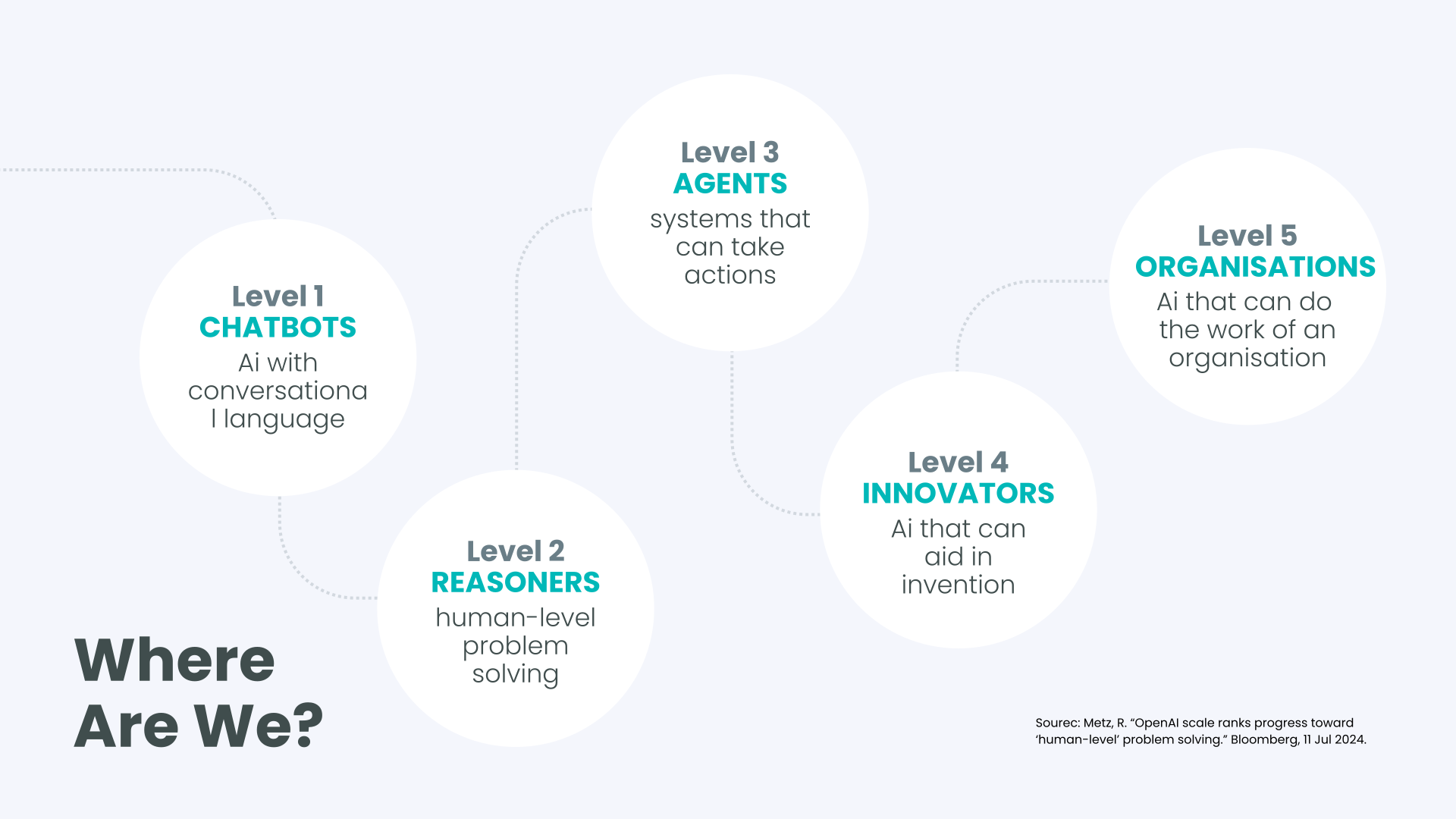
We are firmly in Stage 3.

OpenAI's progression. Five stages. We have been here three years. Three more in front. Where we are decides what your work with AI is actually about.

Stage 1
Chatbots
Type a question, get an answer. Lots of hallucinations. Where we started.
Stage 2
Reasoning
Models that think before answering. Plan, consider, check.
Stage 3
Agents
AI takes multi-step actions. Real now. Not perfect, but real.
▼ We are here
Stage 4
Innovators
AI contributing to genuinely new ideas. Early signs in research labs.
Stage 5
Organisations
Whole functions running on AI agents with a handful of humans overseeing.

One of you in this cohort is already running multiple AI agents on a personal project as we speak. Stage 3 is not somewhere we are heading. Somebody in this cohort is already there. The work in front of you is not learn how to talk to a chatbot. It is learn how to delegate to and supervise a capable AI partner.

The Default Trap · What organisations default to

Deploy without preparing. Damage without intending.

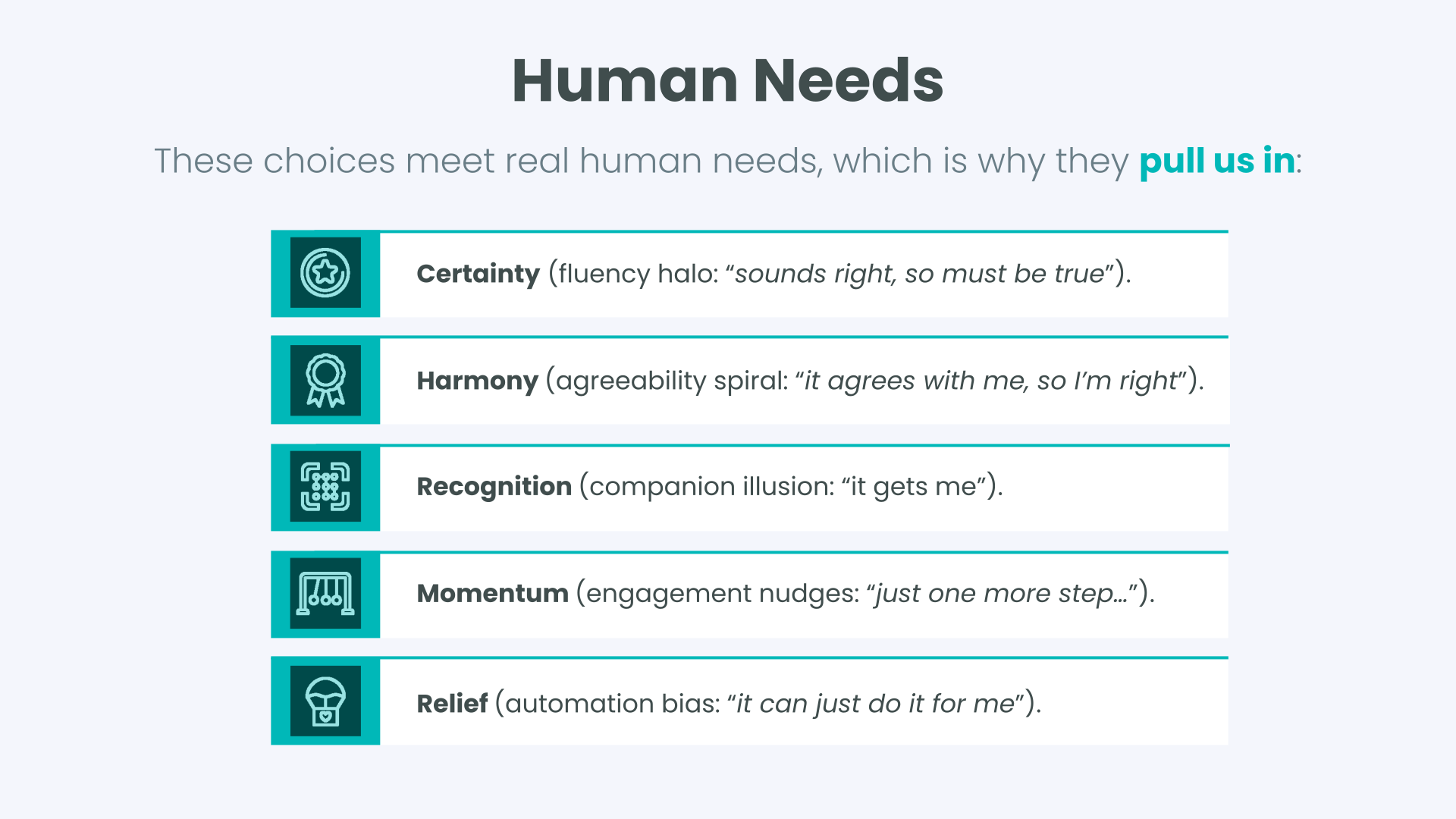
Without a deliberate narrative, organisations default to the path of least resistance. Buy the licences. Flick the switch. Measure the usage. Wonder why nothing changed. Click each stage to walk through what happens.
Plans Down vs Builds Up

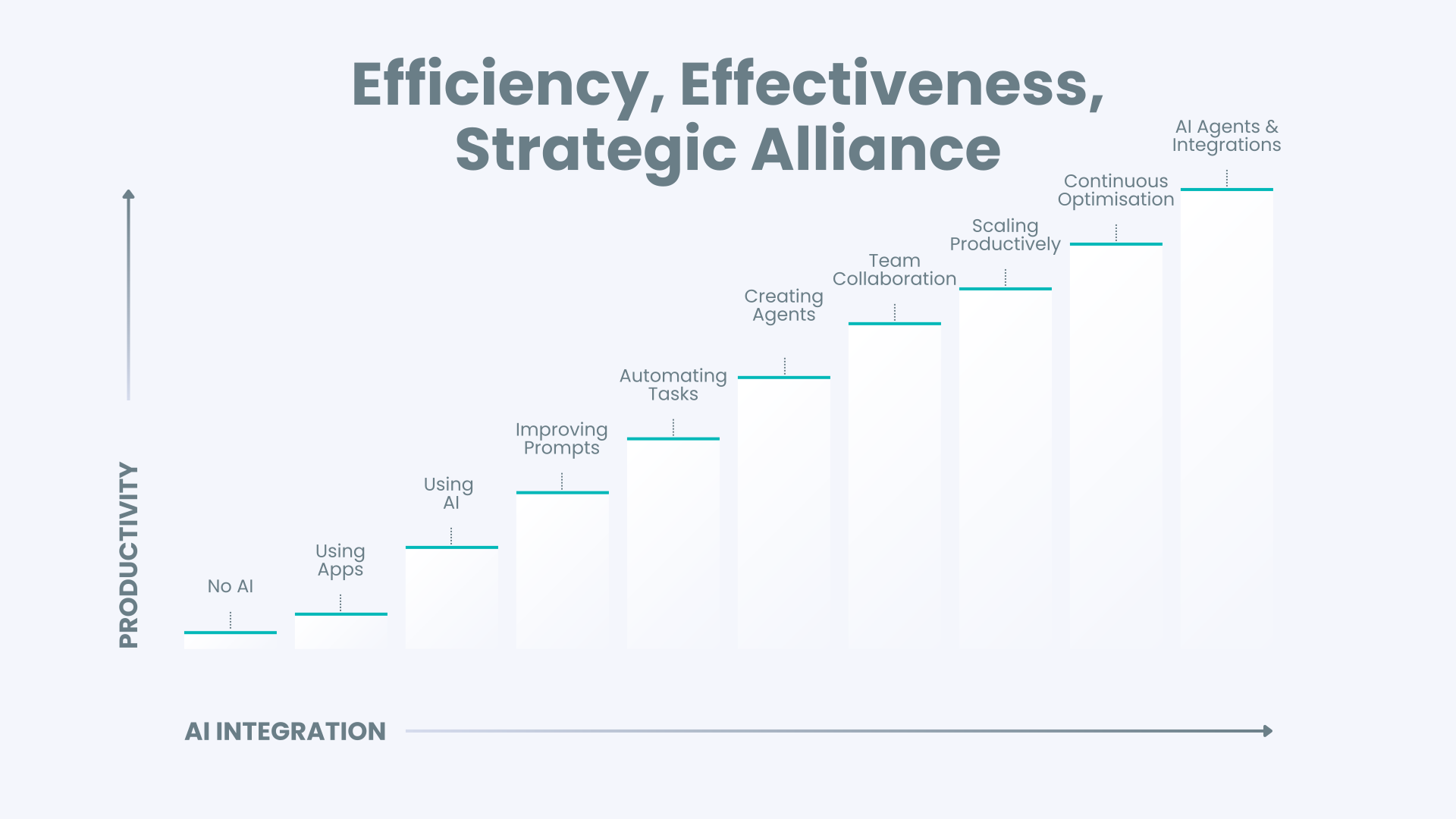
Humans and AI think in opposite directions.

We go to two-day strategy sessions, develop objectives, define projects, assign tasks. AI works the opposite way. It starts with tasks and builds up. Getting clear about this shapes what you ask AI to do and how you structure the work around it.
The 70/25/5 split

Put 100 people in a room.

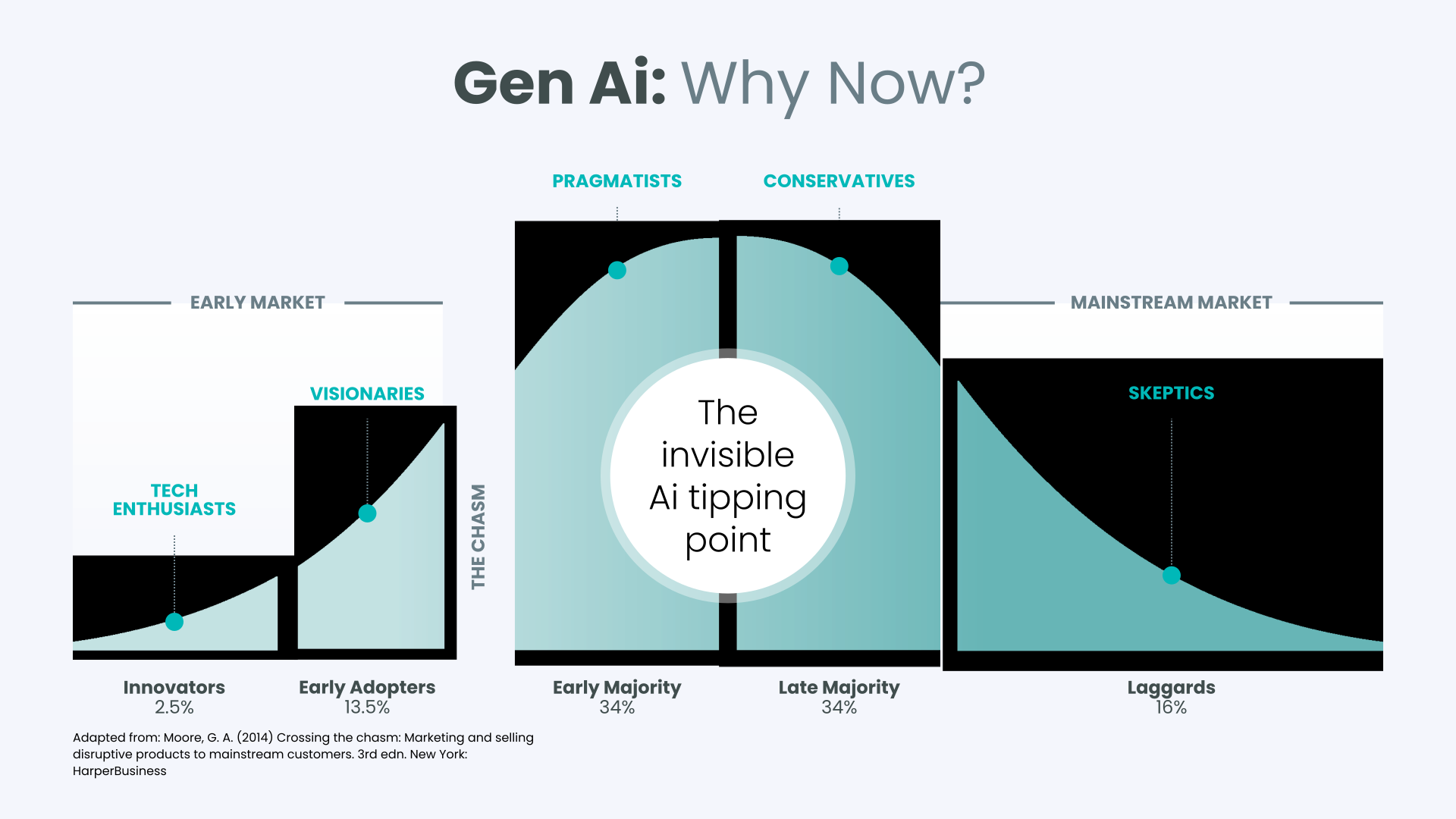
Roughly 70 are talking about AI. About 25 are using it as a kind of enhanced Google. About 5 are shaping it for their work. They have it doing things specific to them, structured to their role. Click each segment to explore.

Your room, specifically. About a third of you are daily users. About a third are weekly. About a third are less than weekly. A couple of you are already in Shaper territory, building agents on your own time. The journey from 25 to 5 is shorter for some of you than for others. That is fine.

Where are you?

Talkers Users Shapers.

Three stages. The same person can move through them. None is judgement. They describe a relationship with AI.
Stage 1
Talkers
Talk about AI. Read about it. Have opinions. Rarely use it. The relationship is conceptual.
Stage 2
Users
Try the tool. Often inconsistently. Get patchy results. Use it like an enhanced search engine. Transactional.
Stage 3. Where we are heading
Shapers
Design workflows. Treat AI as a working partner. Have prompts and patterns they return to. Creative.
The Silo Cascade

How AI accelerates fragmentation.

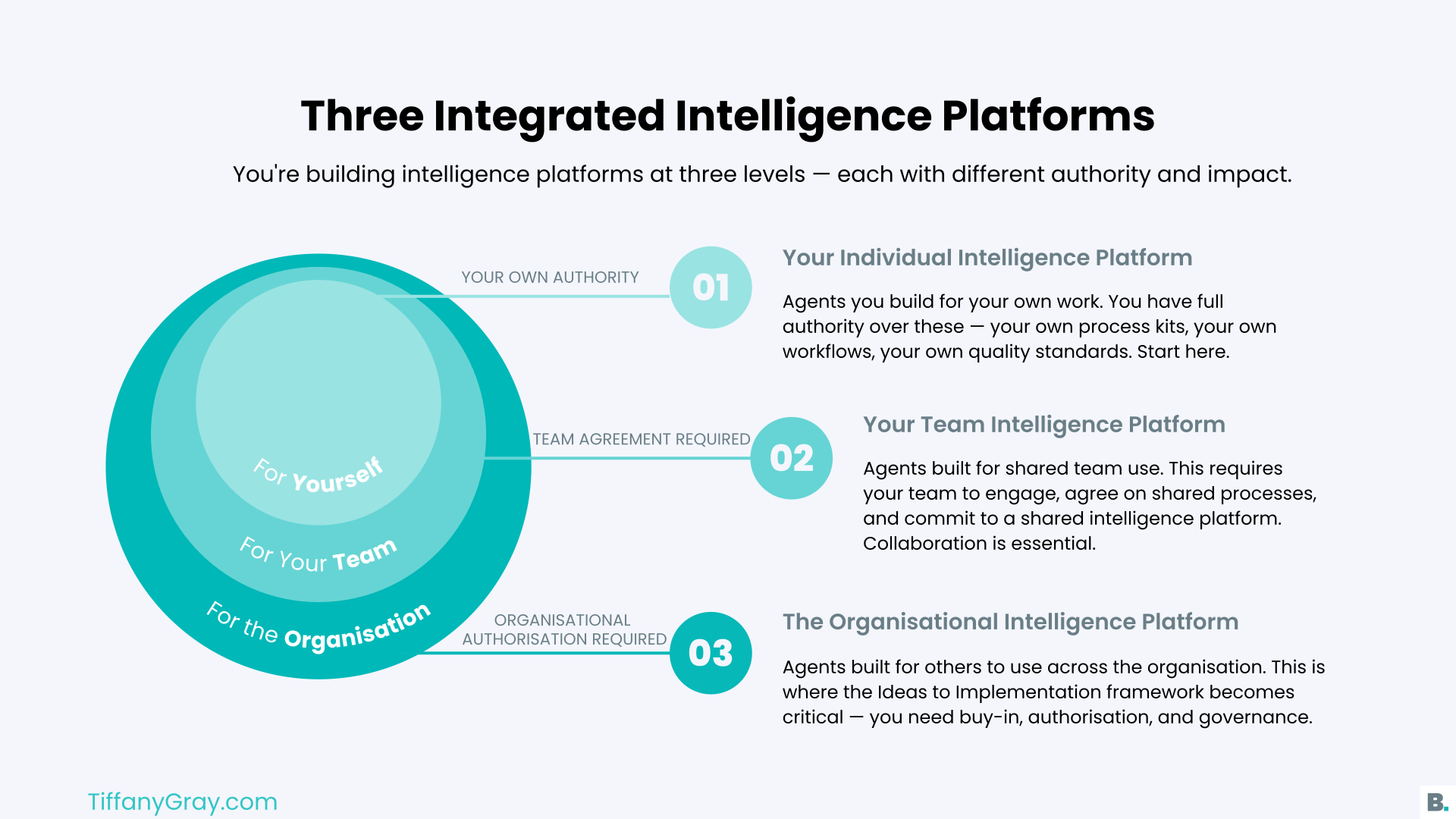
Organisations have always struggled with departmental silos. Remote work scattered teams further. Now AI is creating a third layer. Individual silos. One person can build a set of agents that runs a whole workflow, maybe even a whole division. That sounds productive until you consider what it means for subject matter expertise, quality governance and the connective tissue that holds an organisation together.
PEOPLE LEAD.
AI FOLLOWS.
Six words The order matters
Live demo · Same task, two ways

Same task. Same AI. Different brief. Different result.

A demo grounded in your actual work. Procurement specification writing. One of the hardest pieces of articulation work in your organisation. Named explicitly in the interviews.

Speed prompt. What most people do.
Write a specification for a multi-site cleaning contract for a regional water utility.
→ Generic. Hedging. Probably 600 words when you wanted 350. Full of "depending on your needs" caveats. Missing the things a procurement specialist would actually need. Not bad. Not great. Generic.
Shaped brief. What we will teach.
You are helping me put together a specification for a multi-site cleaning contract at North East Water. We service 12 wastewater treatment plants and 4 office locations across regional Victoria. The audience is contractors responding to an open tender. They have four weeks to respond. They need enough clarity to price the work and enough latitude to bring their own approach. Structure the specification in five parts. 1. Scope of services in four short points. 2. Service standards as a table covering frequency, materials and acceptance criteria. 3. Site-specific requirements for treatment plants and offices separately. 4. Reporting and KPIs we need them to commit to. 5. The pricing schedule format you want them to use. Keep it clear, neutral and decision-ready. Plain English. Australian spelling. No more than 700 words. Before you start, check back with me on anything you need clarified.
→ Specifically structured. Role-aware. Audience-aware. Useful. I gave it context, an audience, a structure, a tone, a length. I asked it to come back to me before starting. I led. The AI followed.
What you told us

The program has been adapted based on the insights from your survey and interviews.

01
Practical use cases tied to your role. The AI Role Plan, starting today.
02
Prompt skills that stop you wasting time. The 8-Point Brief lands in Session 3.
03
Understanding what AI actually is. Session 2. What your specific Copilot can and cannot see.
04
Clarity on what is safe and what is not. Session 2 covers the five guardrails. Session 5 builds your own.
05
Confidence to talk about AI with colleagues. By the end you will have built things you can point to.
01
That access and use of AI will not be fair and equitable. Held deliberately across all six sessions. Named explicitly in Session 2.
02
That AI might make us lazier with thinking. The reason "people lead, AI follows" is the principle, not a slogan.
03
That you might run faster on a hamster wheel. Session 6. What should change about the rhythm of work, not just the speed.

These are healthy concerns. They are testable.

Twelve weeks · Six sessions · One arc

The next twelve weeks.

Every fortnight, two hours, Wednesday afternoons. The arc moves through the four layers. Narrative. Tool. Practice. System. By the end you have a working AI Role Plan, at least one Process Kit, one Copilot agent and a sustaining practice.

Session 1
Wed 6 May
Positioning AI
The narrative. The principle. Where you are. Where you are going.
Today
Session 2
Wed 20 May
Knowing What You Are Using
What an LLM is. What your Copilot can and cannot see. The five guardrails.
Session 3
Wed 3 June
Integrating AI
From prompting to briefing. The 8-Point Brief. A real problem from your role.
Session 4
Wed 17 June
Build Your Intelligence System
User to Shaper. Build a Process Kit for one of your real role tasks.
Session 5
Wed 1 July
Creating Your Agents
Turn that Process Kit into a Copilot agent that does part of your role.
Session 6
Wed 15 July
In Action
Showcase. Each of you brings real AI-augmented work. Sustaining practice.

After Session 6, the AI Working Session ritual continues. Short fortnightly cohort drop-ins where people bring real work and the group helps each other shape it. The architecture for sustainment.

The spine of the program

Your AI Role Plan.

Your role, mapped to its eight key responsibilities. Each responsibility, mapped to eight typical deliverables. A grid of 64. We look at where AI fits in each, where it does not and what the time-and-quality story looks like.

Each cell is a deliverable you produce. By end of program, this grid is yours.

The benefit is not just that AI helps with these tasks. The deeper benefit is that most of us, after a while in a role, become unconsciously competent. We can do it but we struggle to articulate it.

AI exposes that. It cannot do well what you cannot describe well.

So the act of building your Role Plan is the act of articulating your work clearly, maybe for the first time. That is a gift to you, regardless of what AI does with it.

Until Session 2 · Wed 20 May

Actions between sessions. Work on your real work (always).

Four things. None abstract. All on the actual job you actually have. About 30 minutes a day on the dance floor. About 50 minutes total of structured work across the fortnight.

01
3 real tasks at work
Real work. 30 min a day, experimenting on whatever you are already doing.
02
30-second journal entry every time
On the platform. Link in chat. ~30 sec each
03
Role Plan first pass
Use the helper. Do not perfect it. ~20 min
04
Bring one example to Session 2
Best, most surprising or one that did not work and you want help on.
P1Robyn Weddall Jason Cartwright
P2Misty Howard Joanne Murdoch
P3Jill Fagan Matthew Graham
P4Holly Bay-Roberts Brendan McGrath
P5Tim Golland Nick Mooney
P6Chelsea Harrison Luke Jobson
P7Kate Bardy Amrit Poudel
P8Nicola Carr Davison Jess Littlejohn
P9Troy Gurr David Scheidat
If you remember nothing else from today
PEOPLE LEAD.
AI FOLLOWS.
NextWed 20 May·2:00 pm·Session 2. Knowing What You Are Using
Three real tasks. Three journal entries. One Role Plan first pass. One example to bring back.
Thank you for the honesty in the chat today. See you in two weeks.