Where AI is. How it thinks. Where you sit. The principle that holds everything else we do today.
What you will take from the next 70 minutes.
Five things. Each one feeds the rest of the day. None of them require you to open a tool yet. By the end of this session you will have the frame the rest of the day sits inside.
The five stages. Why we are firmly in Stage 3. What that means for the work in front of you today and beyond.
Plans down vs builds up. The trap of speed without depth. Where AI does well and where it falls down.
The 70/25/5 split. Talkers, Users, Shapers. Where you sit now and where you want to be by the end of today.
People lead. AI follows. The frame that holds everything else we will do across the rest of the day.
The story you tell yourself about AI shapes how you work with it. Get yours on the table now. We will come back to it at the end of the day to see what has shifted.
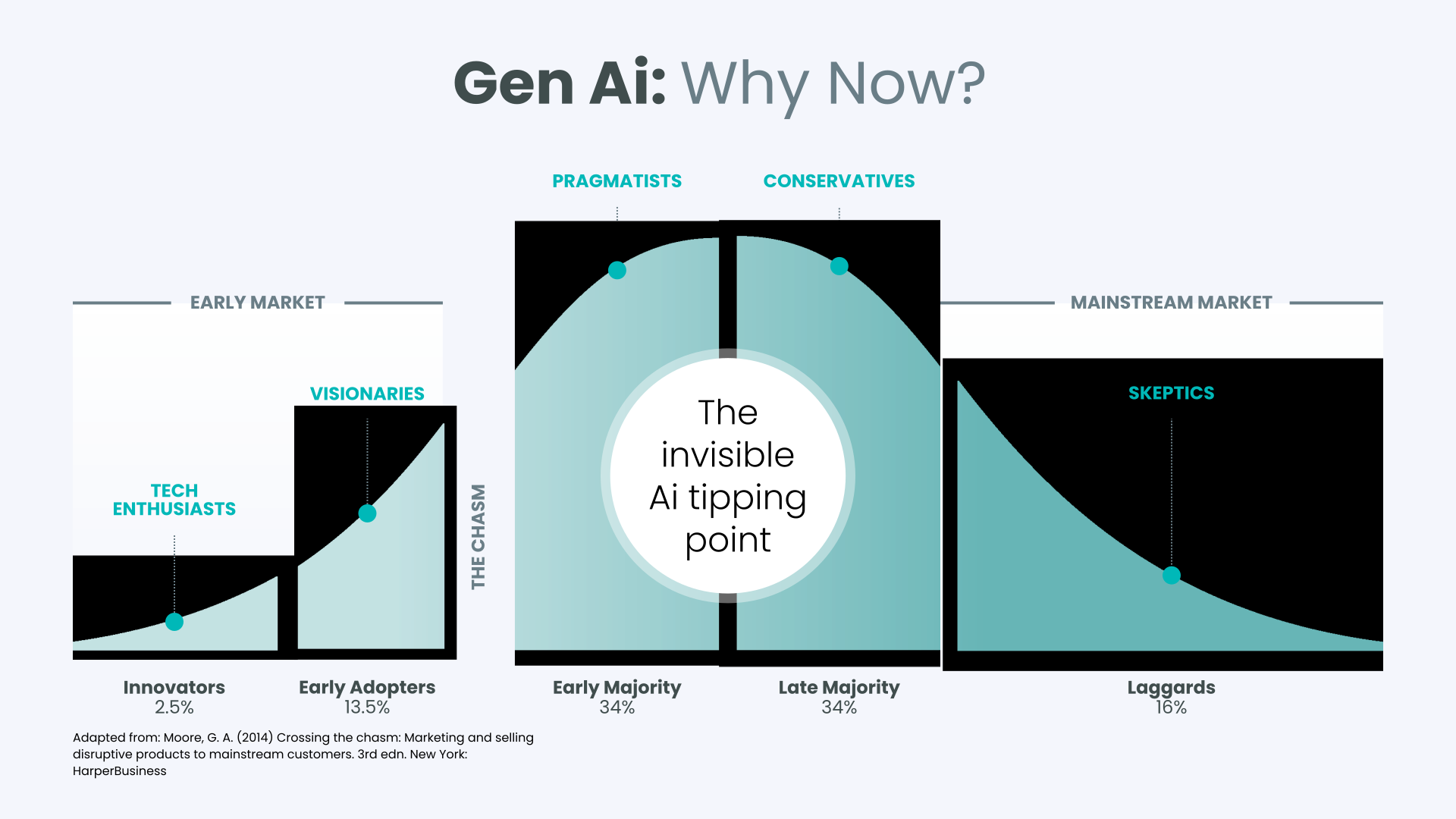
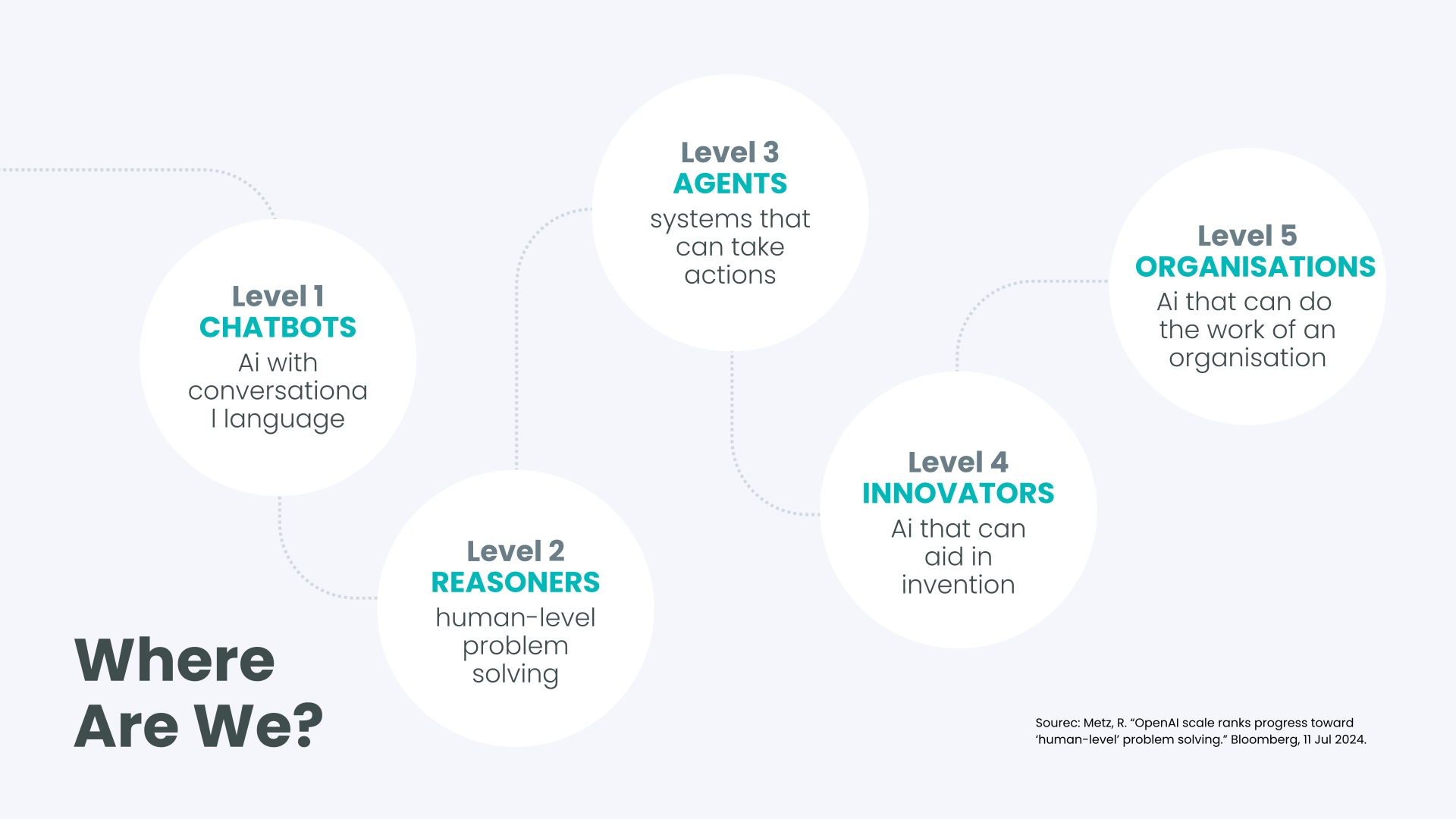
We are firmly in Stage 3.
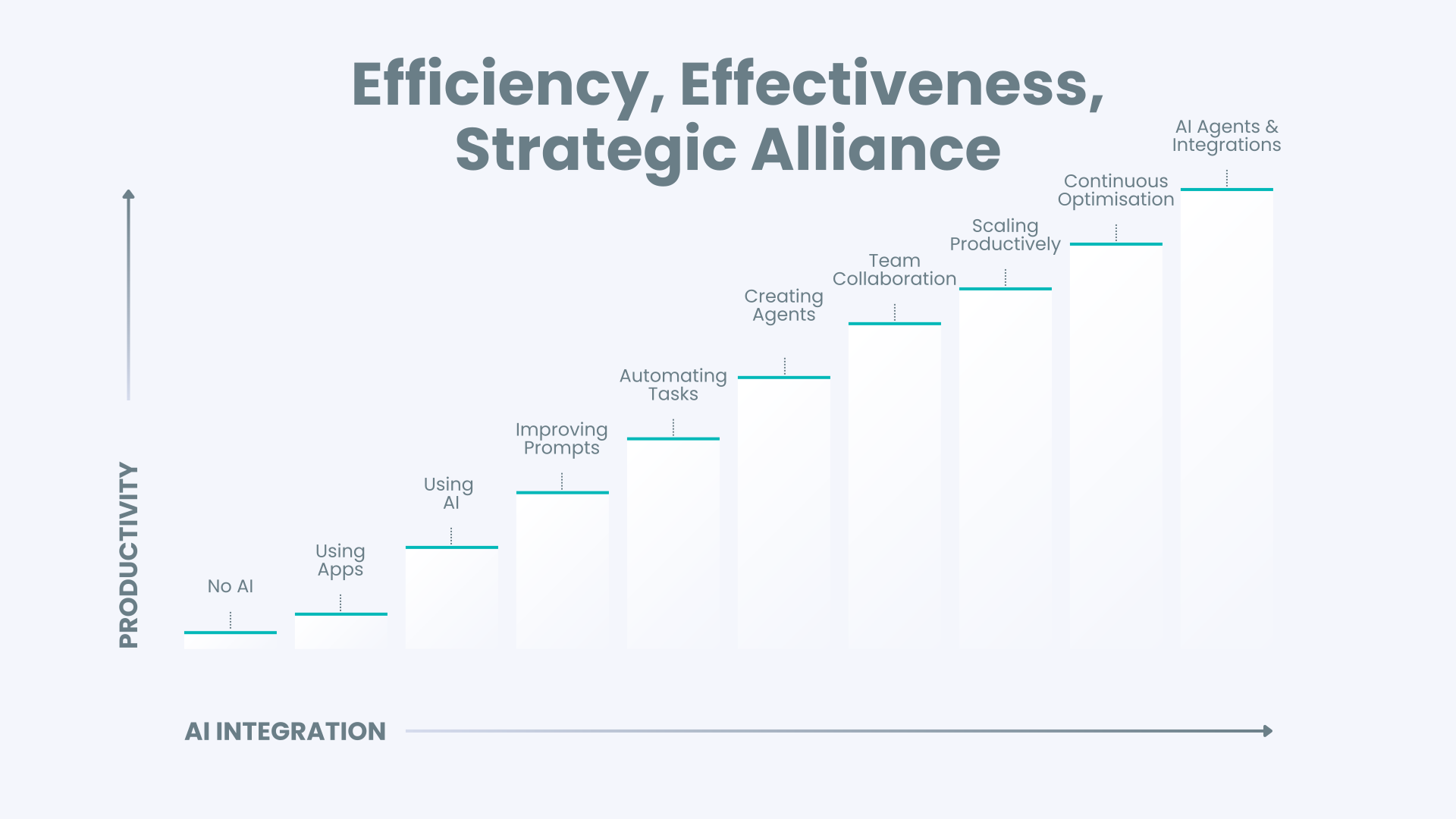
OpenAI's progression. Five stages. We have been here three years. Three more in front. Where we are decides what your work with AI is actually about.
One of you in this cohort is already running multiple AI agents on a personal project as we speak. Stage 3 is not somewhere we are heading. Somebody in this cohort is already there. The work in front of you is not learn how to talk to a chatbot. It is learn how to delegate to and supervise a capable AI partner.
Deploy without preparing. Damage without intending.
Without a deliberate narrative, organisations default to the path of least resistance. Buy the licences. Flick the switch. Measure the usage. Wonder why nothing changed. Click each stage to walk through what happens.
How AI accelerates fragmentation.
Organisations have always struggled with departmental silos. Remote work scattered teams further. Now AI is creating a third layer. Individual silos. One person can build a set of agents that runs a whole workflow, maybe even a whole division. That sounds productive until you consider what it means for subject matter expertise, quality governance and the connective tissue that holds an organisation together.
Humans and AI think in opposite directions.
We go to two-day strategy sessions, develop objectives, define projects, assign tasks. AI works the opposite way. It starts with tasks and builds up. Getting clear about this shapes what you ask AI to do and how you structure the work around it.

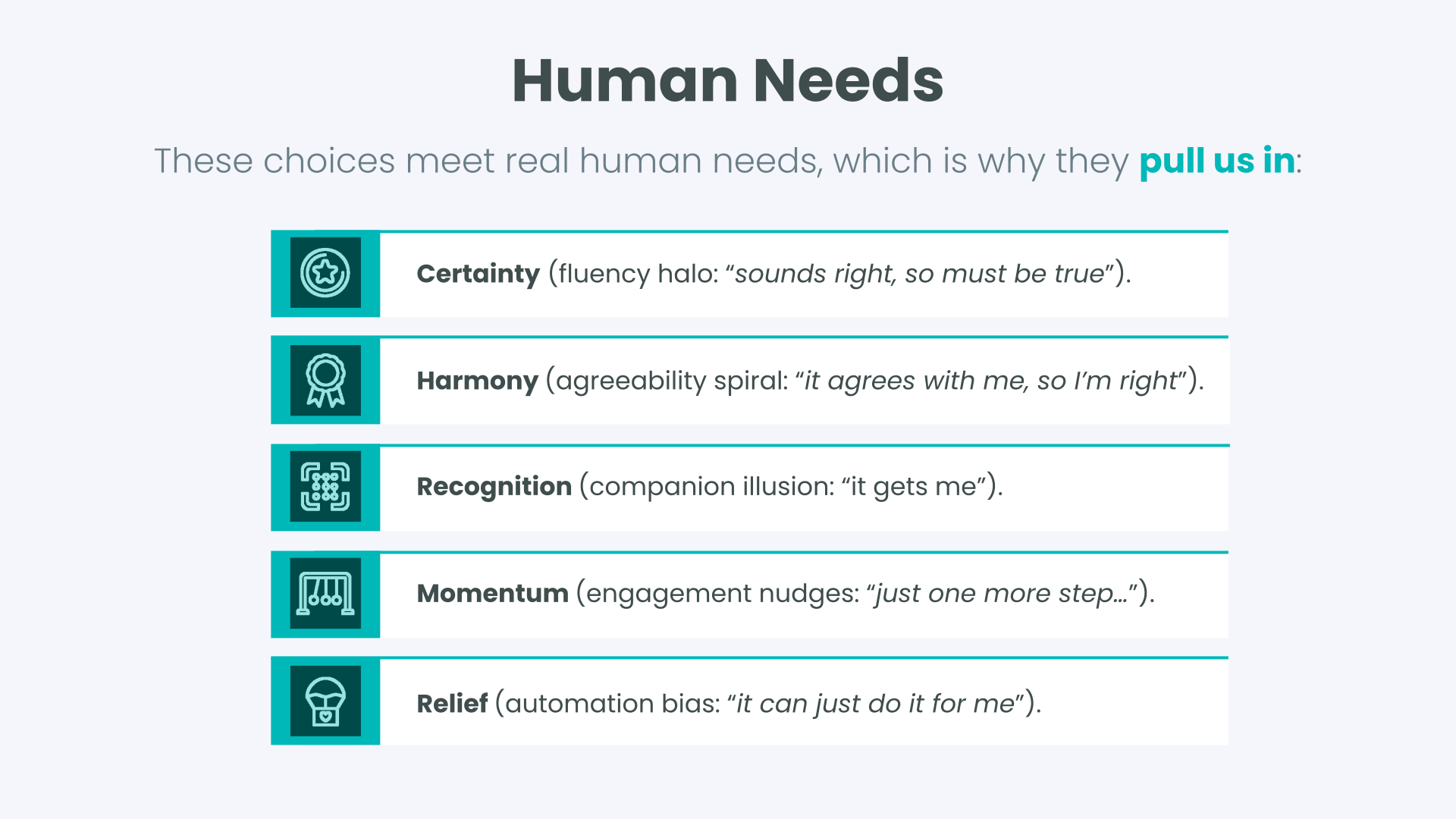
Put 100 people in a room.
Roughly 70 are talking about AI. About 25 are using it as a kind of enhanced Google. About 5 are shaping it for their work. They have it doing things specific to them, structured to their role. Click each segment to explore.
Your room, specifically. About a third of you are daily users. About a third are weekly. About a third are less than weekly. A couple of you are already in Shaper territory, building agents on your own time. The journey from 25 to 5 is shorter for some of you than for others. That is fine.
The Prompting Check. Before you ask.
Shapers do not type more. They think more before they type. Eight quiet questions they run through before sending a prompt. Most people skip them. The 5% do not. Run this check on any prompt and watch the quality of the output change.
The vague ask.
A real prompt. Sent to a real AI. The kind of thing most people type when they are in a hurry. Look at it. Then look at what comes back.
The vague outcome.
Generic. Definitional. Could be about any organisation, any leader, any role. Reads like a textbook entry. You learn nothing you did not already know. You cannot use it.
Leadership is the process of guiding and influencing others toward achieving goals. A good leader inspires, motivates and sets an example. Leadership can take many forms, such as democratic, autocratic or transformational. Leaders need to communicate effectively, make decisions and support their teams.
In today's world, leadership is more important than ever because it helps organisations navigate challenges and achieve success.
The clear ask.
Same topic. Different prompt. Every line is one of the eight check items doing its job. Notice how much thinking has happened before AI sees the question.
The clear outcome.
Specific. Grounded. Audience-aware. Usable. The same eight minutes of thinking turned generic output into work you would actually hand to an emerging leader. This is the gap between the 25% and the 5%.
The world of work no longer runs on tidy instructions. Emerging leaders today step into roles where complexity, shifting priorities and unexpected crises are the norm rather than the exception. In this landscape, leadership is not about having all the answers but about helping people move forward when the map is unclear. This is the essence of adaptive leadership. The art of mobilising people to face challenges that do not have straightforward solutions.
At its core, adaptive leadership recognises that technical problems and adaptive challenges are different. Technical problems can be solved with expertise or existing processes. Upgrading a system, rewriting a policy, adjusting a budget. Adaptive challenges are different. They demand shifts in behaviour, mindset and relationships. They often stir anxiety because they call into question people's values, loyalties or habits. For an emerging leader, learning to distinguish between the two is a vital first step.
One of the most important practices is mobilising people. In practice, this means not taking the burden of change on your own shoulders but engaging your team in the work of adaptation. When a service model no longer meets customer expectations, the temptation is to design the solution yourself. An adaptive leader instead frames the challenge, convenes the team and asks. What do we need to learn and try together?
Adaptive leadership also requires regulating distress. Change provokes discomfort. Without careful management, that discomfort can overwhelm a team or push people into denial. Leaders must find the balance between creating enough tension to spark urgency and providing enough stability for people to feel safe to act.
For emerging leaders, the invitation is clear. Leadership is not about certainty or control. It is about courageously stepping into the unknown, engaging others in the work and holding steady when the ground shifts.
Your narrative shapes how you work with AI.
Whatever you think AI is. That is what AI becomes for you. Tool. Threat. Partner. Distraction. Replacement. The story you tell yourself about AI sets the limit on what you will ever let it do.
You notice what matches your story. You miss what does not.
You stay inside what your story permits. You avoid what does not fit.
What you try shapes your experience. Your experience reinforces your story. The loop continues.
Your narrative did not come from nowhere.
Most of us have not sat down and decided what we think about AI. The story has been shaped by the noise around us. Naming the sources is the first step to choosing what stays and what does not.
What shows up in your feed. The hot takes. The hype cycle.
What your colleagues say at the coffee machine. The shared wins and frustrations.
What your executives told you matters. What got framed as priority.
The fears. The breakthroughs. The job-loss stories. The miracle stories.
What you have tried with AI and what actually happened when you did.
What your organisation has formally told you about AI use at work.
First draft your narrative.
What is your current narrative about AI. And what has shaped it. Be honest. Be specific.
About two minutes each. The story you have been telling yourself about AI. Honest not polished.
LinkedIn. Peer conversations. What your leaders say. The news. Your own experience. Where has yours come from.
We will check in at the end of the day. Has it shifted. Has anything new shown up. Hold it lightly.